
Why Builders Are Choosing LGS Over Traditional Framing
Choosing the right structural framing system is one of the most important decisions in any construction project. The framing method directly impacts structural strength, project timelines, long-term maintenance, sustainability, and overall building performance. In recent years, light-gauge steel vs traditional framing has become a major discussion across commercial, residential, and mid-rise construction sectors.
Traditional framing methods such as wood and masonry have been widely used for decades, but modern projects increasingly demand higher durability, better engineering precision, and faster construction schedules. This is where Light Gauge Steel (LGS) framing stands out as a modern, high-performance alternative.
In this steel vs timber framing guide, we’ll compare both systems in detail and explain why developers, contractors, and engineers are turning toward LGS construction for long-term value and structural reliability.
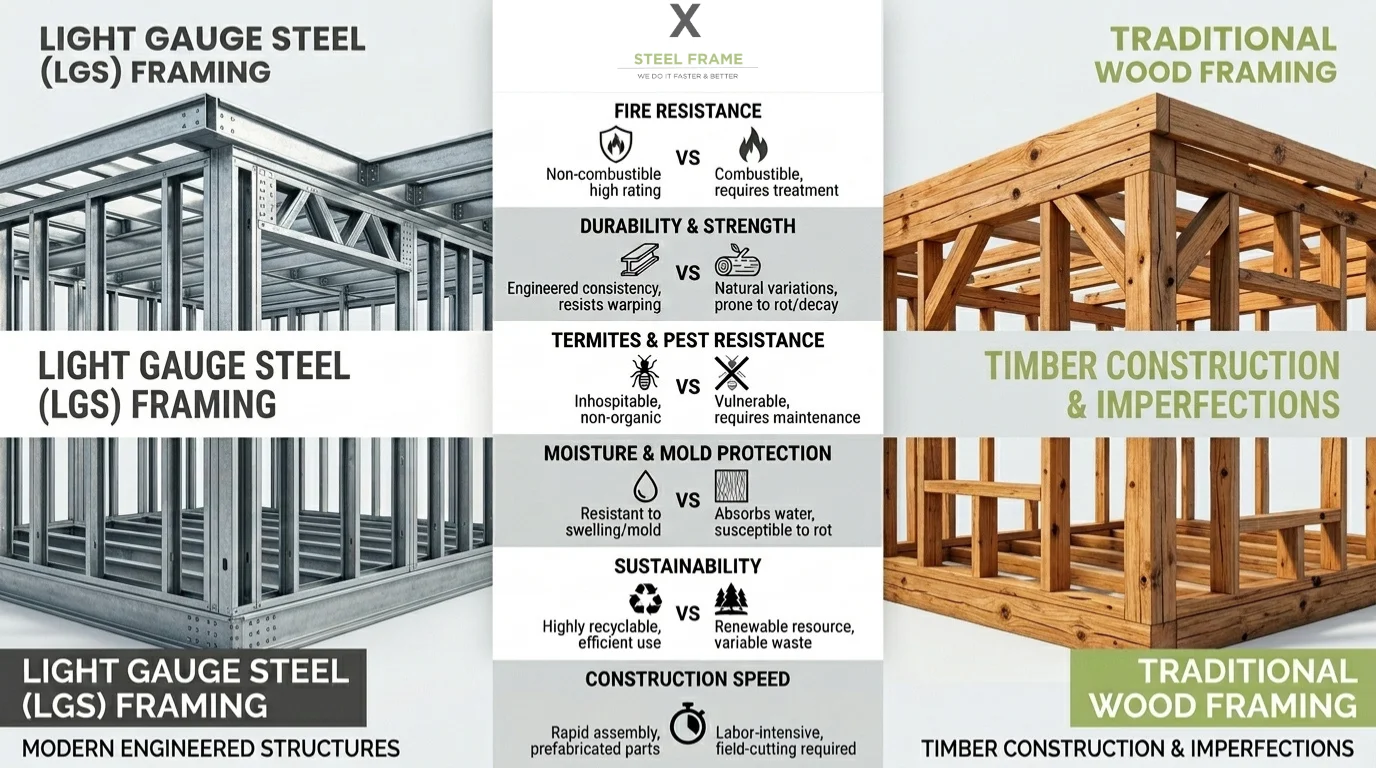
What Is Light Gauge Steel (LGS) Framing?
Light Gauge Steel framing, also known as Cold-Formed Steel (CFS) framing, uses thin galvanized steel sections to create the structural framework of a building. These components include studs, joists, tracks, headers, and wall panels manufactured with high precision in controlled factory environments.
Unlike wood framing, which can vary naturally in quality and dimensions, LGS members are engineered to exact specifications. This makes them ideal for projects that require consistent structural performance, accurate alignment, and strict code compliance.
Today, LGS framing is widely used in:
- Commercial buildings
- Multi-family residential projects
- Interior partition systems
- Mid-rise developments
- Healthcare and educational facilities
- Hospitality projects
For builders seeking modern structural solutions, this light-gauge steel framing guide demonstrates why LGS continues to gain momentum across the construction industry.
Structural Performance: LGS vs Traditional Framing
One of the biggest advantages in any LGS framing comparison is structural consistency. Steel framing provides predictable engineering properties because every member is manufactured under strict quality controls.
Light Gauge Steel Advantages
- High strength-to-weight ratio
- Excellent dimensional stability
- Precise load calculations
- Reduced structural movement over time
- Better resistance to bending and twisting
Wood framing, on the other hand, naturally varies depending on species, moisture content, knots, and grain patterns. Over time, timber can shrink, warp, or crack, affecting wall alignment and finish quality.
For commercial and mid-rise projects where engineering precision matters, LGS offers a significantly more reliable structural system. Projects that combine framing expertise with coordinated engineering workflows often achieve better structural efficiency and reduced construction conflicts. Learn more about integrated engineering coordination in modern steel construction.
Durability and Long-Term Performance
Durability is another major factor when comparing light-gauge steel vs traditional framing.
Why LGS Lasts Longer
Light gauge steel does not:
- Rot
- Warp
- Shrink
- Crack
- Attract termites or pests
This is especially important in humid and coastal regions such as Florida, where moisture exposure can severely affect wood framing over time.
Galvanized steel framing maintains its structural integrity for decades with minimal maintenance. In contrast, timber framing may require repairs or treatment due to mold, moisture damage, or insect infestation.
For developers focused on lifecycle value and reduced maintenance costs, LGS construction offers a clear long-term advantage.

Construction Speed and Efficiency
Modern construction projects depend heavily on speed and scheduling efficiency. One of the strongest LGS construction advantages is the ability to accelerate project timelines.
Because steel framing components are factory-produced with precision, they arrive ready for installation. This reduces:
- On-site cutting
- Material waste
- Labor-intensive modifications
- Construction delays
Many projects also use panelized LGS systems, where wall assemblies are pre-manufactured off-site and quickly installed in the field.
Traditional timber framing often requires more on-site adjustments and manual labor, increasing installation time and reducing consistency.
Faster framing means:
- Earlier project completion
- Faster inspections
- Reduced labor costs
- Quicker occupancy and revenue generation
For commercial developers, these efficiencies can significantly improve project profitability.
Sustainability and Environmental Benefits
Sustainability is becoming a priority in modern construction, and this is another area where LGS performs exceptionally well.
Environmental Benefits of LGS
- Steel is 100% recyclable
- Recycled steel maintains full quality
- Reduced material waste during fabrication
- Lower long-term maintenance demands
- Supports LEED and green building initiatives
While wood is considered renewable, responsible forestry practices vary significantly, and timber still faces issues related to waste, moisture damage, and shorter service life in some environments.
For environmentally conscious developers and ESG-focused projects, LGS provides a more verifiable and durable sustainable solution.
Fire Resistance and Code Compliance
Another major advantage of this steel vs timber framing guide is fire safety.
Light-gauge steel is non-combustible, making it highly effective for meeting strict fire-rating requirements in commercial and multi-family buildings. Steel framing can also be engineered to satisfy:
- Florida Building Code requirements
- HVHZ standards
- Wind-load regulations
- Seismic requirements
- Commercial occupancy fire ratings
Wood framing is combustible and may require additional fire-protection measures depending on the project type.
LGS framing also supports easier engineering coordination and more predictable inspections, helping reduce costly compliance issues during construction.
Cost Comparison: Initial Cost vs Long-Term Value
One of the most common questions in any LGS framing comparison is cost.
Light-gauge steel may indeed have slightly higher upfront material costs than traditional timber framing. However, focusing only on initial material pricing does not provide the full picture.
Long-Term Cost Benefits of LGS
- Lower maintenance expenses
- Reduced labor costs
- Faster installation schedules
- Less material waste
- Improved durability
- Reduced repair and replacement needs
Over the lifespan of the building, these savings often outweigh the higher initial investment. For larger commercial and mid-rise projects, the economic advantages of LGS become even more significant.
Why LGS Is the Future of Modern Construction

As construction standards evolve, builders increasingly prioritize durability, precision, sustainability, and speed. Light-gauge steel framing addresses all of these needs while offering superior long-term performance compared to traditional framing systems.
Whether you are planning a commercial development, residential project, or interior framing system, LGS provides a future-ready structural solution designed for modern construction demands.
If you are exploring high-performance framing systems, learn more about specialized LGS and CFS solutions, drywall steel framing, and the benefits of modern steel framing systems through X Steel Frame’s professional construction services.
