Structural performance is not simply about the strength of individual components — it is about how every element of a building system works together under real-world loading conditions. Achieving optimal structural performance in cold-formed steel (CFS) construction requires more than strong engineering design in isolation. It requires integrated engineering coordination across all disciplines that contribute to the final structure and building system.
When designing modern commercial and residential buildings, thinking in technical silos is no longer viable. To unlock the true potential of lightweight, high-strength steel, an interconnected approach to design and fabrication is paramount.
What Does Integrated Mean in Engineering Coordination?
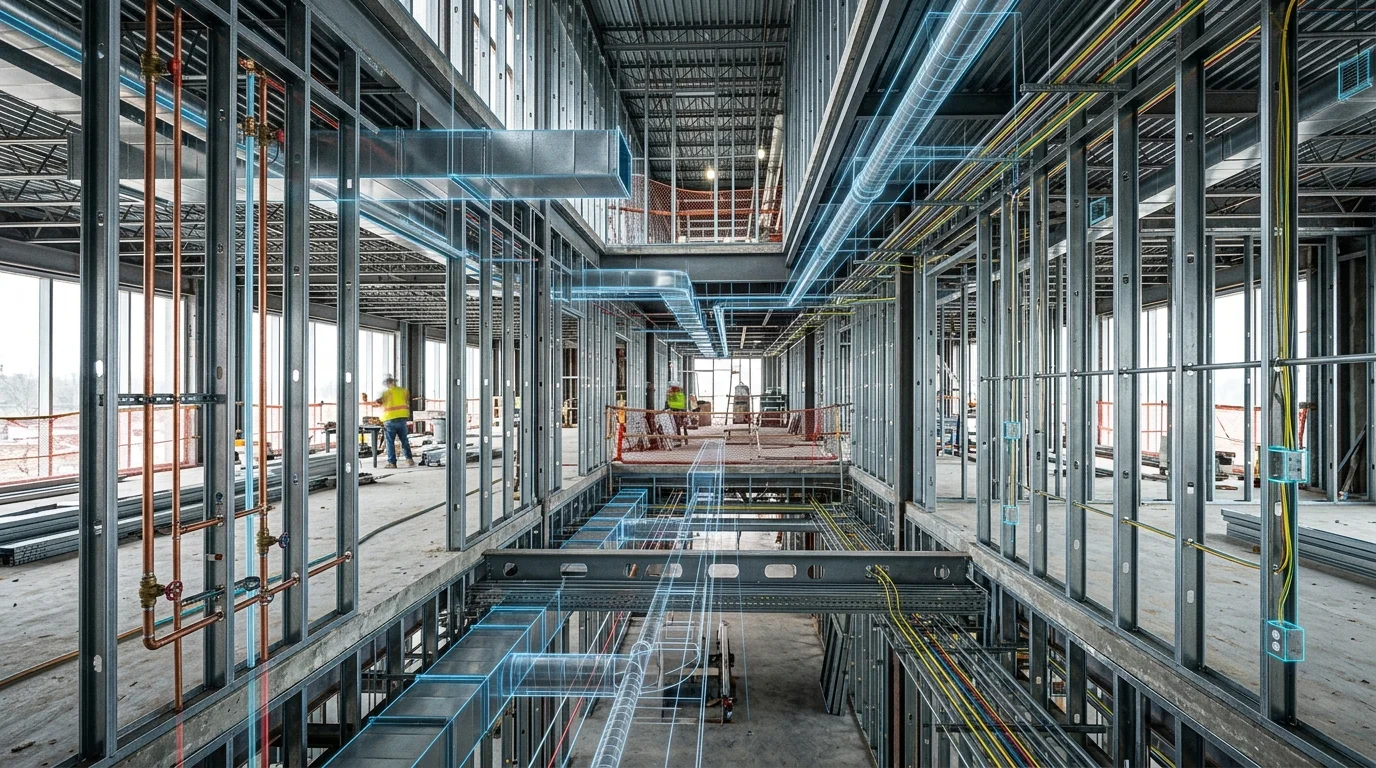
Integrated engineering coordination means that the structural, architectural, mechanical, electrical, plumbing (MEP), and facade systems are all coordinated in a unified, disciplined process rather than in isolated technical silos. Each discipline’s requirements are considered in relation to all others, and conflicts are identified and resolved before fabrication or construction begins on-site.
In CFS construction, integration is particularly critical because the steel framing system interfaces directly with nearly every other building system throughout the structure. Unlike traditional heavy hot-rolled steel or concrete, CFS framing involves precise, pre-engineered profiles where even a minor misalignment can disrupt the installation of interior drywalls, exterior cladding, or overhead HVAC ductwork.
As developers globally realize why steel framing is the future of construction industry, implementing advanced integrated coordination becomes essential. It utilizes cutting-edge technology, such as Building Information Modelling (BIM), to create a digital twin of the structure, ensuring clash detection is handled in the virtual phase rather than during active field assembly.
Key Dimensions of Enhanced Structural Performance
When engineering coordination is properly integrated, structural performance improves across several key dimensions:
1. Load Path Clarity
An integrated coordination process ensures that every load in the structure has a clearly defined and fully engineered path from the point of application to the foundation. Gravity loads, wind uplift, and seismic forces must transfer seamlessly through the framing. Gaps or weaknesses in the load path are identified and resolved in the coordination phase — before they become expensive structural problems on-site or, worse, in the completed building.
2. Connection Integrity
CFS structures rely on many individual connections — screws, clips, and anchors — that must all be correctly specified and installed to achieve the designed structural performance. Integrated engineering coordination produces detailed connection schedules that eliminate all ambiguity about connection type, size, spacing, and installation method. This ensures that every connection in the structure performs exactly as the engineer designed it to perform under all applicable load conditions, preventing localized failures.
3. Deflection Control
CFS structures must be carefully designed to control deflection under load — excessive deflection can cause severe cosmetic and structural damage to attached facades, interior finish systems, and MEP installations. Integrated coordination ensures that deflection requirements are fully understood across all disciplines and accounted for in the design of each building system. Facade systems, partition walls, and MEP supports all need to accommodate the structural movements that the engineer has calculated and specified, allowing the building to flex safely without cracking finishes or rupturing pipes.

The Costly Impact of Poor Coordination on Structural Performance
When engineering coordination is absent or inadequate, structural performance suffers in predictable and well-documented ways. The consequences of fragmented planning ripple across the entire lifecycle of a project, resulting in:
- Undersized Members: Components become undersized or incorrectly specified for actual site conditions because the real-world weight of secondary systems (like heavy mechanical units or stone cladding) wasn’t accurately communicated.
- Improvised Field Fixes: Connections are improvised on-site rather than engineered in advance, leading to substandard structural joints that compromise safety margins.
- Unapproved Modifications: Penetrations through structural members are cut or punched without analysis of their effect on load capacity and structural integrity, often to make way for last-minute plumbing or electrical routing.
The cumulative impact of these compromises can be significant and difficult to detect until serious problems emerge during or after construction completion, leading to costly structural remediation, litigation, and project delays.

Integrated Coordination at X Steel Frame
At X Steel Frame, integrated engineering coordination is the foundation of our service offering and the source of the structural performance improvements our clients experience on every project. We bridge the gap between architectural vision and structural reality.
We work across all building disciplines to ensure that the CFS structural system is designed, detailed, and coordinated to perform at its full engineered potential — consistently and measurably from project to project across Florida. By leveraging state-of-the-art detailing software and maintaining open channels of communication with architects, MEP engineers, and general contractors, X Steel Frame eliminates the guesswork from cold-formed steel framing.
Conclusion: Unlock Your Building’s Full Potential
Integrated engineering coordination is not just about preventing structural problems — it is about unlocking the full structural performance potential of your CFS building system. It streamlines the construction timeline, reduces material waste, and guarantees peace of mind for developers and structural engineers alike.
X Steel Frame brings the expertise and coordination discipline to ensure that your project achieves exactly the structural performance your design intends. Contact us today to discuss how integrated coordination can improve your next construction project, protect your investment, and elevate your building standards across Florida.
