
There’s a version of code compliance that most engineers and developers have lived through at least once: the design gets finalized and submitted for a permit, and then the plans examiner sends back a list of items that need to be addressed before approval moves forward. Everyone scrambles, the schedule slips, and the redesign work ends up costing more than it would have if it had happened three months earlier. Code-aware structural design exists specifically to prevent that scenario, and it’s worth understanding exactly what separates it from a standard design-then-check approach.
The Core Difference Is Sequencing, Not Effort
Every structural design eventually gets checked against code — that’s not optional, and no engineer skips it. The difference with a code-aware approach is when that checking happens. Instead of designing the structural system first and evaluating code compliance as a later step, a code-aware process starts with the applicable code requirements and uses them to actively shape the structural decisions from the beginning. It sounds like a subtle distinction, but it changes which problems get caught early versus which ones get caught late—and late is always more expensive.
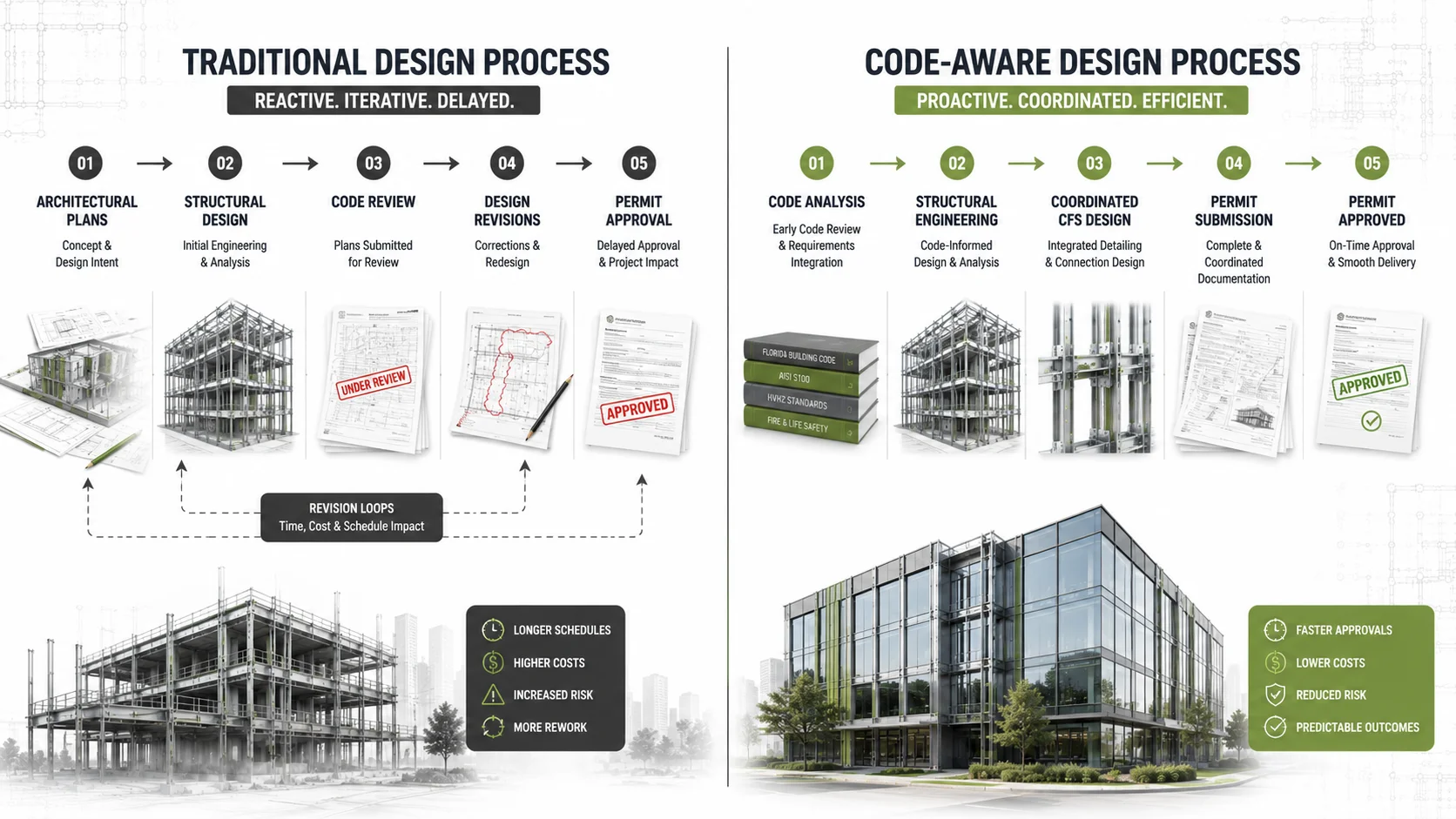
What This Looks Like for CFS Projects in Florida
For cold-formed steel structures, a handful of regulatory frameworks matter most: the Florida Building Code sets the baseline structural, fire, and life-safety requirements; AISI S100 governs the engineering of individual CFS members; and in Miami-Dade and Broward Counties, HVHZ provisions add additional product approval and wind-load requirements on top of the standard code. We broke down the HVHZ side of this in detail in our guide to meeting HVHZ and life-safety codes in steel construction. A code-aware approach means all of these frameworks are on the table during initial load determination and member selection, not introduced later as a compliance check.

Load Determination Comes First
Practically, this starts with getting the load picture right from the outset — HVHZ wind loads, seismic considerations where relevant, and occupancy-specific live loads all need to be established before member sizing begins, not adjusted afterward. A structural system designed against an incomplete load picture often needs significant rework once the full code requirements are applied, and that rework tends to ripple through connection design, member sizing, and sometimes the overall structural layout.
Connection and Assembly Details Need the Same Treatment
Code-aware design doesn’t stop at member sizing. Connection design has to satisfy the loading conditions and building classification from the start, and fire-rated assembly details have to be specified to match the occupancy type rather than adjusted after the fact. A small deviation in a fire-rated wall assembly — the wrong drywall thickness, missing fire-stopping — can invalidate the entire rating, and catching that during design review is a very different experience than catching it during a failed inspection.
Why This Matters More for Developers Than It Might Seem
For a developer, the appeal of a code-aware approach isn’t really about the engineering philosophy — it’s about predictability. A project that clears plan review without major revision cycles holds its schedule. A project that gets bounced back for code issues doesn’t, and every week of delay during permitting has a real financing cost attached to it. Developers who’ve been through a rough permitting cycle once tend to ask about this specifically on the next project, because they’ve felt what the alternative costs.
Structural Engineers Benefit From This Too
For engineers of record, working with a coordination partner that takes a code-aware approach means the shop drawings and connection packages that come back are already aligned with the design intent and the applicable code — not something that needs to be re-checked line by line. That’s less about trust and more about workflow efficiency; it frees engineers to focus on design judgment rather than compliance policing.
How Engineering Coordination Ties Into This
Code-aware design doesn’t happen automatically just because someone mentions it in a proposal. It requires a coordination process that actively tracks code requirements at every stage of design, not just at submission. We described what that coordination process looks like more broadly in our article on engineering coordination in CFS construction, and code-awareness is really an extension of that same discipline applied specifically to regulatory compliance.

At X Steel Frame, our code-aware structural systems team builds Florida Building Code, HVHZ, and life-safety requirements into the CFS design process from the first structural layout, not as a late-stage checklist. Paired with our broader engineering coordination services, the goal is straightforward: a project that clears plan review the first time, on the schedule the developer actually planned around.
Code compliance was never really optional. What’s optional is whether you deal with it in month two or month eight — and that choice tends to define how the rest of the project goes.
