
When it comes to structural framing, two materials dominate the market: steel and wood. Both have served the construction industry for many decades, but they perform very differently across key performance criteria. This guide compares steel vs wood framing head-to-head across strength, durability, speed, code compliance, and cost so you can make the most informed structural decision for your next project.
Strength and Structural Performance
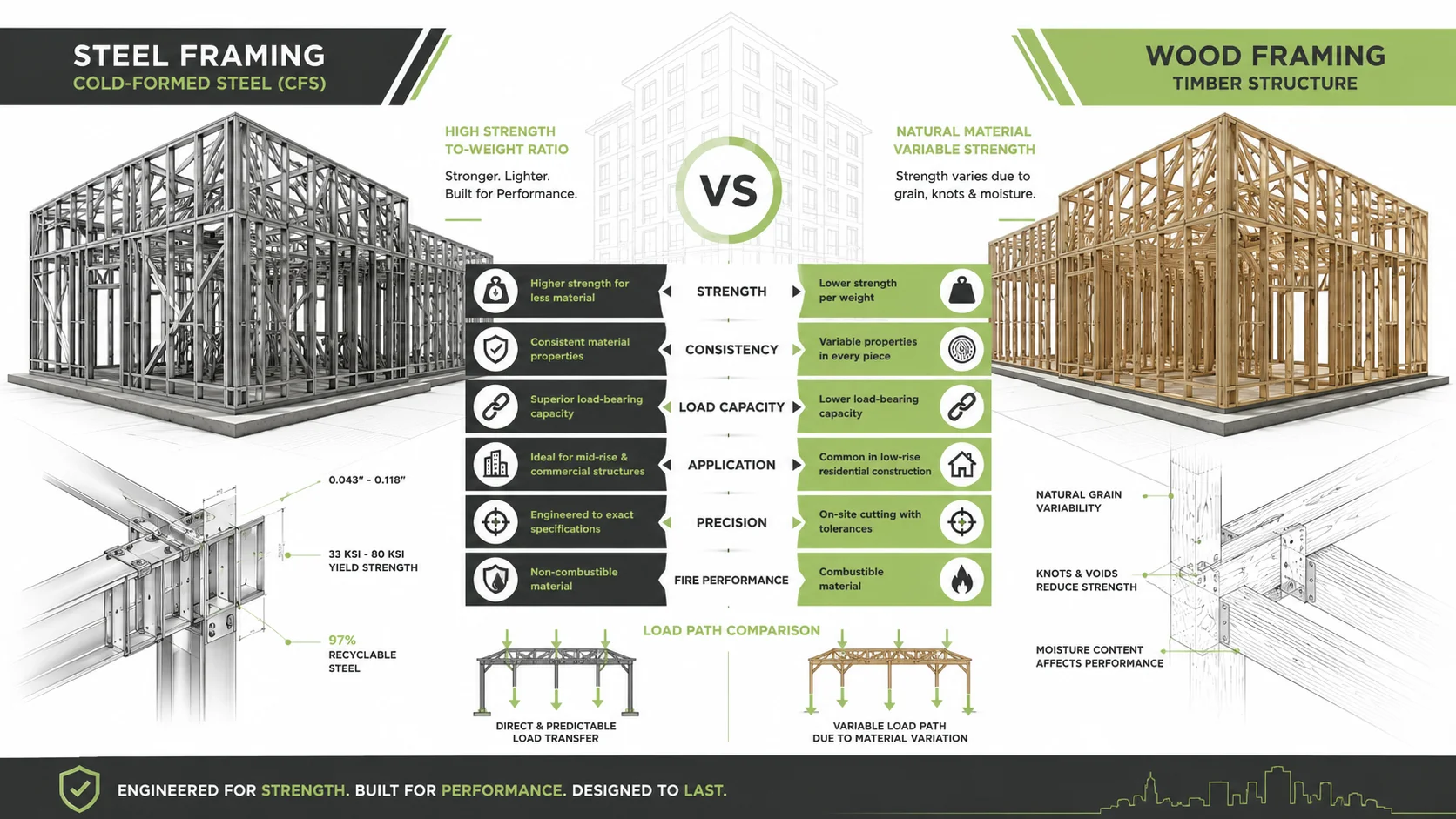
Steel framing, particularly cold-formed steel (CFS), offers a superior strength-to-weight ratio compared to timber. Steel members are manufactured to consistent specifications, ensuring fully predictable structural performance under all load conditions. Wood is a natural material with variable grain patterns, knots, and moisture content that can significantly affect its structural strength. For mid-rise buildings, commercial structures, and any project requiring precisely engineered load paths, steel framing is the clear choice.
Durability and Longevity
Steel does not rot, warp, shrink, swell, or attract pests under any conditions. In humid, coastal, or high-moisture environments like Florida, these properties are not just desirable — they are essential for long-term building performance. Wood framing in Florida’s climate requires chemical treatments, regular maintenance, and is still vulnerable to moisture damage and termite infestation over the building’s service life. A steel-framed building will maintain its full structural integrity for decades with minimal maintenance requirements.

Fire Performance
Steel is non-combustible, meaning it does not contribute fuel to a fire. Wood is combustible, though it can be engineered with fire-retardant treatments and fire-rated assembly systems. Both materials can achieve required fire ratings with appropriate drywall assemblies, but steel framing’s non-combustibility is a meaningful and measurable advantage in life-safety design and Florida Building Code compliance.
Code Compliance
In jurisdictions with demanding structural requirements — such as Florida’s HVHZ standards and Florida Building Code provisions — steel framing can be engineered with far greater precision to meet code requirements. Cold-formed steel systems designed by experienced engineering coordinators like X Steel Frame ensure that compliance is built into the design from day one, eliminating the costly surprises that arise when code issues are identified late in the construction process.
Construction Speed
Factory-produced steel members arrive cut to specification, significantly reducing on-site labor and material waste. Panelized steel framing systems can be assembled in a factory and installed rapidly on-site. Wood framing is typically cut and assembled on-site by hand, which is slower and more dependent on weather conditions and skilled labor availability. For large commercial and mid-rise projects where time equals money, steel framing’s speed advantage translates directly into lower construction costs and faster occupancy.

Cost Comparison
Wood framing generally has a lower upfront material cost than steel, which is why it remains common in single-family residential construction. However, when factoring in labor savings, waste reduction, reduced long-term maintenance costs, and lower insurance premiums for steel structures, the total lifecycle cost of steel framing is often competitive or superior to wood. For commercial and mid-rise projects, scale amplifies every efficiency gain — making steel framing the economically superior choice.
Environmental Impact
Steel is 100% recyclable with no quality degradation across multiple cycles. Most steel framing products contain significant recycled content and contribute to LEED certification. Wood is renewable but requires responsible forestry management, and certification programs vary widely in rigor and reliability. For projects targeting sustainability credentials, CFS framing offers a clear and verifiable environmental story.
Conclusion
For the majority of modern construction projects — especially commercial, mid-rise, and code-sensitive applications — steel framing offers clear and measurable advantages in strength, durability, speed, and compliance. X Steel Frame’s integrated engineering coordination services ensure that these advantages are fully realized on every project we support. Contact us to discuss your steel framing requirements today.
